Light, medium, and heavy-duty towing, flatbed transport, winch-outs, and accident recovery, 24 hours a day. One call puts a local tow operator on the way.

When your vehicle has to move and you cannot drive it, towing is the answer, and the kind of tow matters. Dallas Tow Truck Company makes one call cover the whole range. Whether you are dealing with a stalled sedan in Uptown, a work van that died on the LBJ Freeway, or a wrecked car that needs to leave an accident scene, a local tow operator with the right truck heads your way. The line is answered around the clock, so the time of day never changes the answer.
Towing splits into a few jobs. Light-duty towing covers cars, SUVs, and pickups. Medium and heavy-duty towing covers box trucks, work vans, and larger vehicles that need wrecker-grade equipment. Flatbed transport carries anything that should not roll on its own wheels. Recovery and winch-outs pull a vehicle back when it ends up off the pavement. The person who answers your call sorts out which one you need and sends the right truck the first time.
One number covers the full range. Describe your vehicle and what happened, and the right truck is sent.
Cars, SUVs, and pickups towed to your shop, dealer, or home anywhere in Dallas.
Low-clearance, all-wheel-drive, luxury, classic, and non-running vehicles ride flat, no road contact.
Box trucks, work vans, and larger vehicles handled with wrecker-grade equipment.
A wrecked vehicle cleared from the scene to the body shop or storage yard you choose.
Stuck in mud, a ditch, or off the road? A winch pulls you back to solid ground.
No keys, dead engine, flat tires, or a seized transmission? A flatbed loads what will not roll.
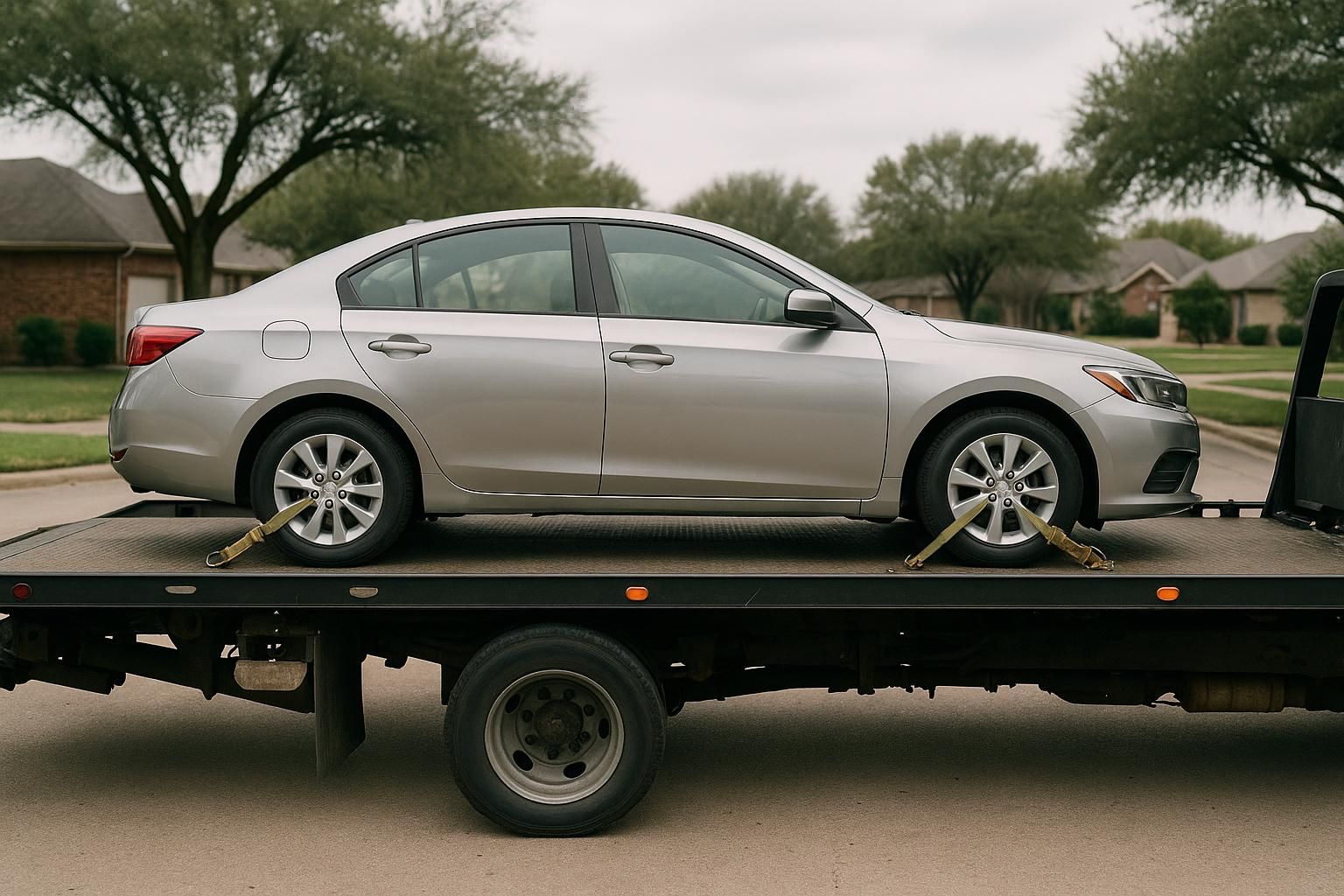
A flatbed tow starts with the bed tilting down to the road. Your vehicle is winched or driven gently onto the deck, secured with wheel straps or soft ties at the chassis points, and the bed levels out for the trip. From that moment until drop-off, the vehicle does not touch the road again. There is no drivetrain spinning, no tire scrubbing, and no chance of a low bumper catching on a curb.
That matters more than most drivers realize. A wheel-lift tow is quick and works well for many front- and rear-wheel-drive cars, but it leaves two wheels on the ground. For an all-wheel-drive vehicle, that can mean real transmission or differential damage. For a lowered or exotic car, the approach angle alone can crack a splitter. A flatbed sidesteps all of it, which is why dealerships, body shops, and collectors across the metroplex insist on one for anything expensive, fragile, or already damaged.
Loading is done with care. The operator uses the correct tie-down points for your specific vehicle rather than wrapping a chain wherever it is convenient, and checks the load before pulling out. Careful loading is not slower in any way that matters, and it is the difference between a vehicle that arrives perfect and one that arrives with a fresh problem.
Get yourself and your passengers to safety first, switch on your hazards, and call. Stay clear of traffic while you wait. Tell the person on the line your location, the vehicle, and whether it rolls and steers, so the operator arrives ready to load.
Call (469) 327-7176Towing pricing depends on a few simple things: how far the vehicle is going, the type and size of the vehicle, and whether any extra work is needed to load it, such as winching a car out of a tight spot. Those are weighed up and you get a clear number on the phone before a truck is sent. You will not get a vague estimate that grows at drop-off, and you will not find surprise fees on the final bill.
Coverage reaches every part of Dallas, from Downtown, Uptown, and Deep Ellum to Oak Cliff, Lakewood, Preston Hollow, and Far North Dallas, along with the major routes like I-35E, I-30, the LBJ Freeway, Central Expressway, and the Dallas North Tollway. Tows also run for the nearby suburbs, including Richardson, Irving, Garland, Mesquite, and Plano. Need a different service? Roadside assistance covers jump starts, tire changes, lockouts, and fuel delivery.
Heavy-duty work gets the same straight treatment. Box trucks, large vans, and equipment need the right wrecker and an operator trained for the weight, and that is what shows up when you describe the job on the phone. The same goes for long hauls and storage: say where the vehicle needs to end up, whether that is across town or across the state, and you get a quote for the full trip before anything moves. Nothing is loaded until you have heard the number and said go ahead.
Cars, SUVs, pickups, vans, and box trucks. Local operators run flatbed and wheel-lift equipment for light and medium-duty vehicles and wrecker-grade trucks for heavy-duty jobs, running or not.
Yes. A non-running vehicle gets winched onto a flatbed or lifted, including cars with no keys, a dead battery, flat tires, or a seized transmission.
Yes. After a collision, a vehicle is cleared from the scene to the body shop or storage yard you choose, handled carefully around damaged frames and suspension, usually on a flatbed.
A winch-out pulls a vehicle back to solid ground after it slides off the road, gets stuck in mud, or drops into a ditch. Describe the spot on the phone so the right equipment arrives.
Cost depends on distance, the vehicle, and any extra work to load it, such as a winch-out. You get a clear price on the phone before a truck is sent, with no surprise fees at drop-off.